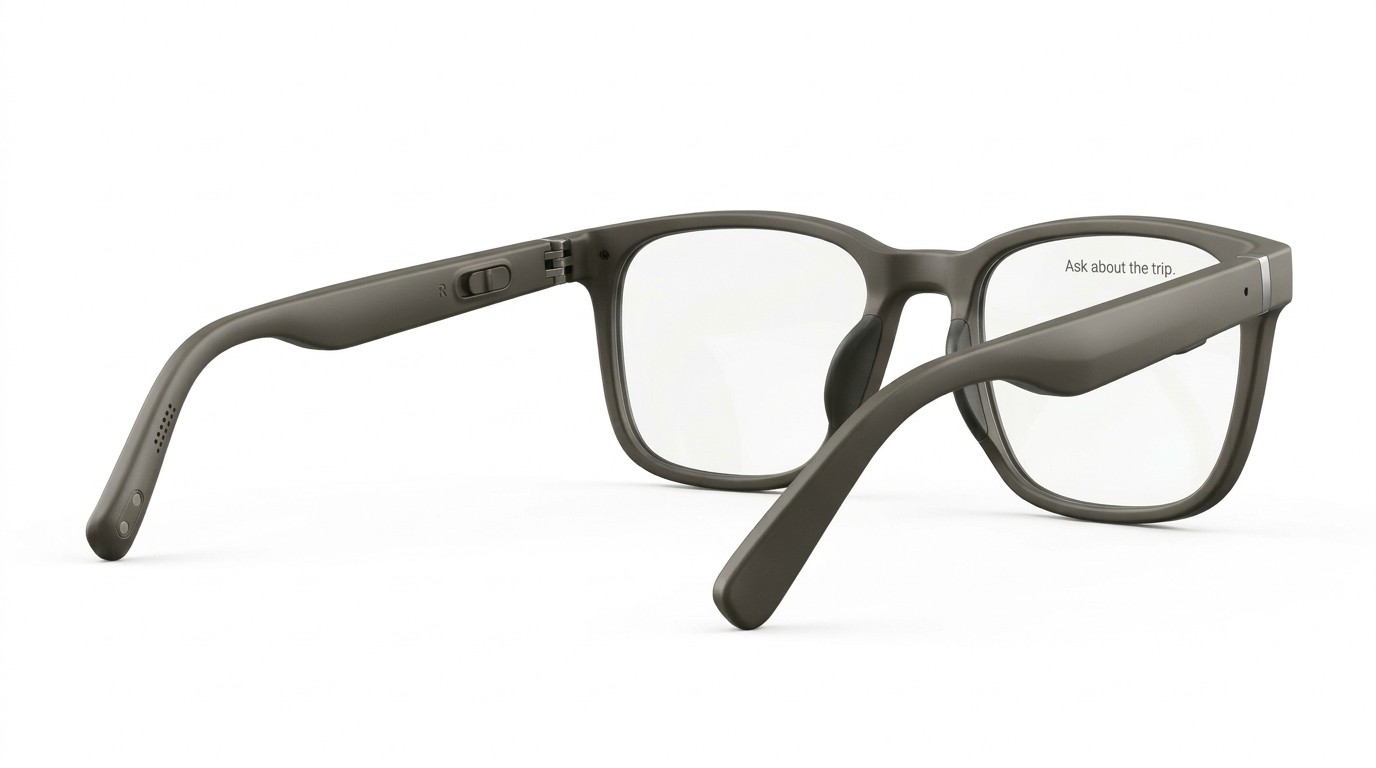
Everlook

Everlook

Find your place in the conversation.

Find your place in the conversation.

An AI-assisted wearable concept that helps people experiencing memory difficulties recover the thread of a conversation through discreet assistance they control.

CONTEXT | 24-hour team makeathon, followed by independent development

ROLE | Glasses designer on the makeathon team (sketches and CAD); sole designer during independent development

TOOLS | Figma, Figma Make, Claude, SolidWorks, Onshape, KeyShot

STATUS | Concept. Interaction and hardware feasibility have not yet been validated.

A smaller problem with a more personal impact

At the makeathon, our team developed the concept together: smart glasses for recognition and contextual reminders. My responsibility was designing the glasses themselves, from early sketches through the CAD model.

When I continued the project independently, I narrowed it to one specific moment: losing the thread of a conversation and needing a discreet way to find your place again. Everlook focuses on that moment, offering a brief reminder when the wearer asks for help rather than interrupting automatically.

Original concept

Refined direction

From the team’s broad recognition concept to a single moment: getting back into a conversation.

Assistance should start with the wearer

I compared four directions: ambient recognition, conversational re-entry, prepared encounters, and a phone with earbuds. I chose wearer-initiated assistance, supported by information prepared in advance. Starting with the wearer’s request keeps them in control and avoids unnecessary interruptions, while prepared information still supports conversations they expect to have.

Four directions explored. Wearer-initiated support, with prepared encounters, moved forward.

A reminder the wearer can review and correct

The interaction follows four steps:

Request → Retrieve context → Review → Re-enter

The wearer asks for a reminder, receives a brief cue based on available context, and decides whether to use, dismiss, or correct it. If the context is insufficient, the system acknowledges uncertainty rather than inventing an answer. In the middle of a conversation, a confident wrong reminder does more harm than no reminder.

From the wearer’s request to a response, with controls to dismiss, retry, or correct along the way.

The uncertainty path matters most: when context is thin, Everlook says so instead of guessing.

Everlink: more time and control outside the conversation

The wearable is designed for brief, in-the-moment reminders. Everlink, a companion interface, handles what needs more time: preparing information before a conversation, and approving, reviewing, or correcting saved content afterward.

The wearable is designed for brief, in-the-moment reminders. Everlink, a companion interface, handles what needs more time: preparing information before a conversation, and approving, reviewing, or correcting saved content afterward.

Preparing and correcting information happens in Everlink, so the wearable can stay brief.

Keeping temporary context separate from saved information

A wearable that handles conversation needs clear boundaries around what it captures, retains, and shares. The proposed design separates temporary conversational context from information the wearer explicitly chooses to save through Everlink, with clear deletion behavior and local processing evaluated where feasible.

These are design requirements, not implemented capabilities, and would need to be assessed against hardware, model, and privacy constraints.

Privacy concept (wearable shown generically): temporary context and wearer-approved information follow separate paths; only chosen information is saved to Everlink.

Choosing a hardware direction
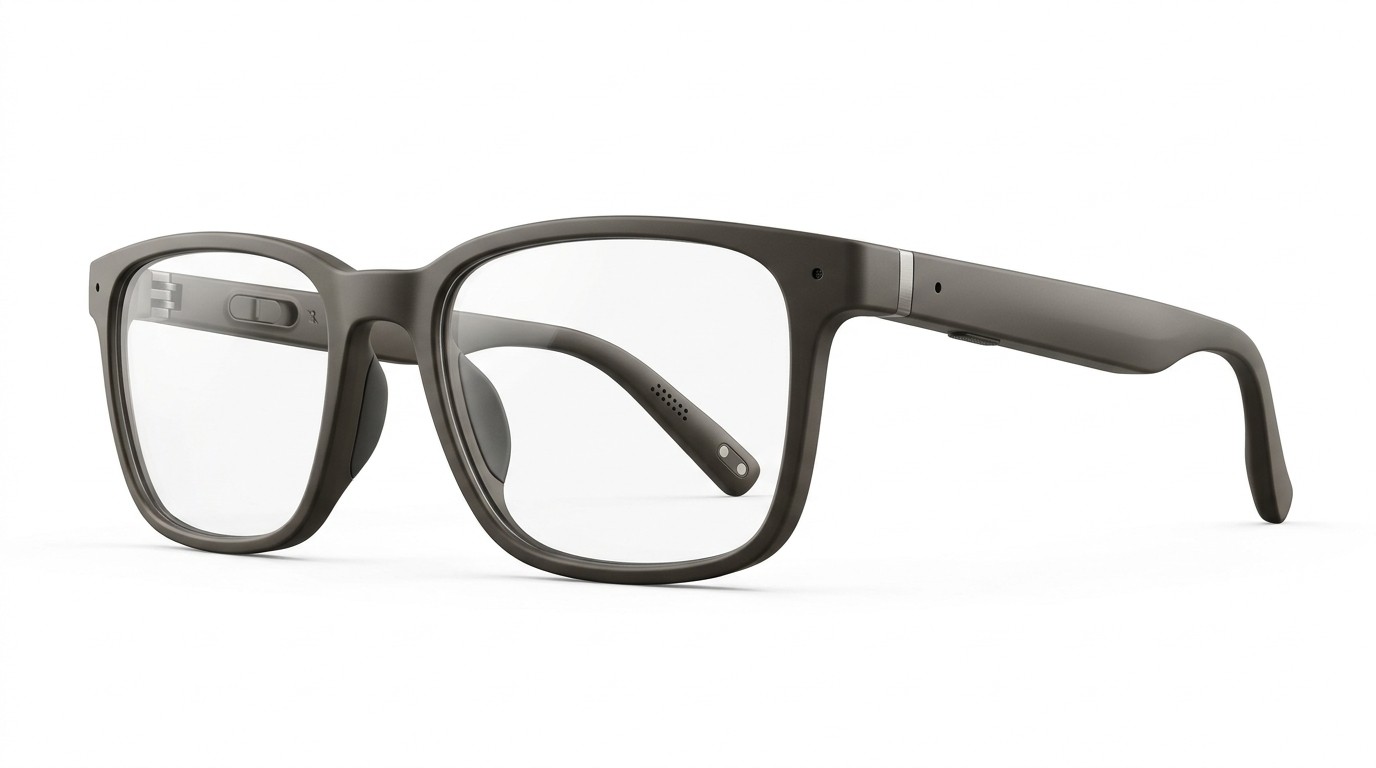
Building on the glasses I designed at the makeathon, I explored three ways to deliver the interaction, each balancing discretion, feedback, and hardware complexity differently.

Audio-first glasses: A physical request control and open-ear audio deliver reminders without the wearer needing to look away.

Display-based glasses: A subtle near-eye display presents short visual cues.

Modular clip-on: A removable temple module houses the electronics separately from the frame.

Audio-first glasses: a physical assistance button for wearer-initiated reminders

MICROPHONE ARRAY

ASSISTANCE BUTTON

PRIVACY TOGGLE

MICROPHONE ARRAY

ASSIST BUTTON

MICROPHONE ARRAY

ASSISTANCE BUTTON

PRIVACY TOGGLE

MICROPHONE ARRAY

ASSIST BUTTON

Display-based glasses: a near-eye display adds short visual cues

OPEN-EAR SPEAKERS

NEAR-EYE DISPLAY

OPEN-EAR SPEAKERS

NEAR-EYE DISPLAY

INTERNAL ELECTRONICS

REMOVABLE TEMPLE MODULE

INTERNAL ELECTRONICS

REMOVABLE TEMPLE MODULE

Modular clip-on: a removable temple module houses the electronics

Audio-first glasses: a physical assistance button for wearer-initiated reminders

MICROPHONE ARRAY

ASSISTANCE BUTTON

PRIVACY TOGGLE

MICROPHONE ARRAY

ASSISTANCE BUTTON

PRIVACY TOGGLE

MICROPHONE ARRAY

ASSISTANCE BUTTON

PRIVACY TOGGLE

MICROPHONE ARRAY

ASSISTANCE BUTTON

PRIVACY TOGGLE

Audio-first glasses: a physical assistance button for wearer-initiated reminders

Display-based glasses: a near-eye display adds short visual cues

OPEN-EAR SPEAKERS

NEAR-EYE DISPLAY

INTERNAL ELECTRONICS

REMOVABLE TEMPLE MODULE

Modular clip-on: a removable temple module houses the electronics

Display-based glasses: a near-eye display adds short visual cues

NEAR-EYE DISPLAY

OPEN-EAR SPEAKERS

NEAR-EYE DISPLAY

OPEN-EAR SPEAKERS

INTERNAL ELECTRONICS

REMOVABLE TEMPLE MODULE

INTERNAL ELECTRONICS

REMOVABLE TEMPLE MODULE

Modular clip-on: a removable temple module houses the electronics

Audio-first glasses are the strongest fit for Everlook. The physical control maps directly to wearer-initiated assistance: help arrives only when the wearer asks for it. Open-ear audio lets them keep their eyes on the person they’re talking to, which matters when the whole goal is staying in the conversation. Without a display, the frame can stay closer to everyday glasses in appearance and has fewer components to integrate.

The display-based direction adds a visual channel, but it draws the wearer’s attention away from the conversation and raises questions about readability and distraction. The modular clip-on offers flexibility, but concentrating the electronics on one temple makes balance and comfort harder to resolve, and the add-on looks less integrated. It could remain a later option for wearers who want to keep their own frames.

Audio-first still has open questions: whether cues stay discreet in practice, and whether they’re easy to hear in noisy settings.

What needs to be validated

Three questions would determine whether Everlook should move forward:

Does the reminder help? Can the wearer recover conversational context without introducing confusion?

Does the wearer remain in control? Can they recognize and correct an inaccurate suggestion, or dismiss it easily?

Does the wearable justify its form? Does it offer enough value over a phone and earbuds to warrant dedicated hardware?

What I learned

Refining Everlook meant narrowing the product’s ambition. Instead of asking how a wearable could remember more, I focused on when assistance is useful, how the wearer initiates it, and what control they need over the response.

That decision shaped both the AI behavior and the hardware direction. Choosing audio-first glasses came from the same priorities: keeping the wearer present in the conversation and in control of when help arrives.

Let’s connect.

EMAIL ↗

© 2026 Sarah Fernandes.

More work to explore.

Let’s connect.

© 2026 Sarah Fernandes.

More work to explore.

Let’s connect.

EMAIL ↗

© 2026 Sarah Fernandes.